
Serving Miami-Dade, Broward & Palm Beach Counties
📞 (645) 225-2074 · info@airflowsolutionsusa.com
Miami runs its air conditioning nearly every day of the year, and that single fact drives most of what happens inside South Florida ductwork.
Miami’s tropical climate holds average relative humidity around 73%, with summer mornings regularly reaching 84%. Air conditioners here operate in cooling mode almost continuously, which means evaporator coils stay wet, condensate pans carry water year-round, and the system rarely gets an extended dry period. Cooling-coil and condensate-pan biofilm is the most commonly identified indoor mold source in South Florida homes – not the ductwork itself, but the equipment feeding it.
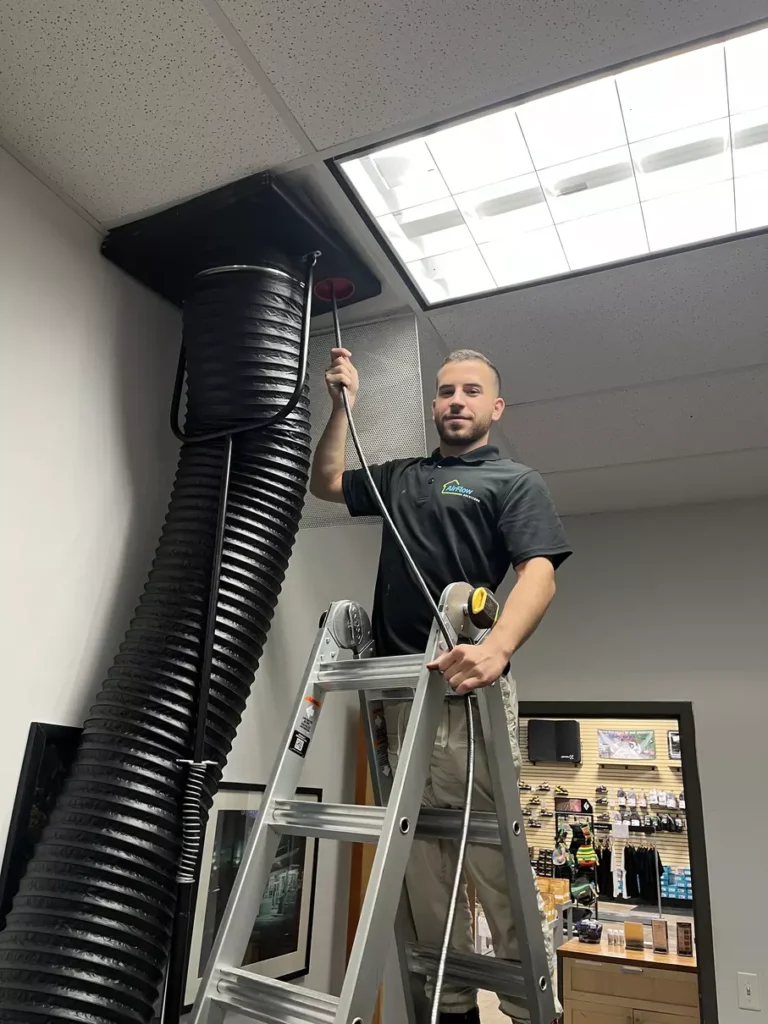
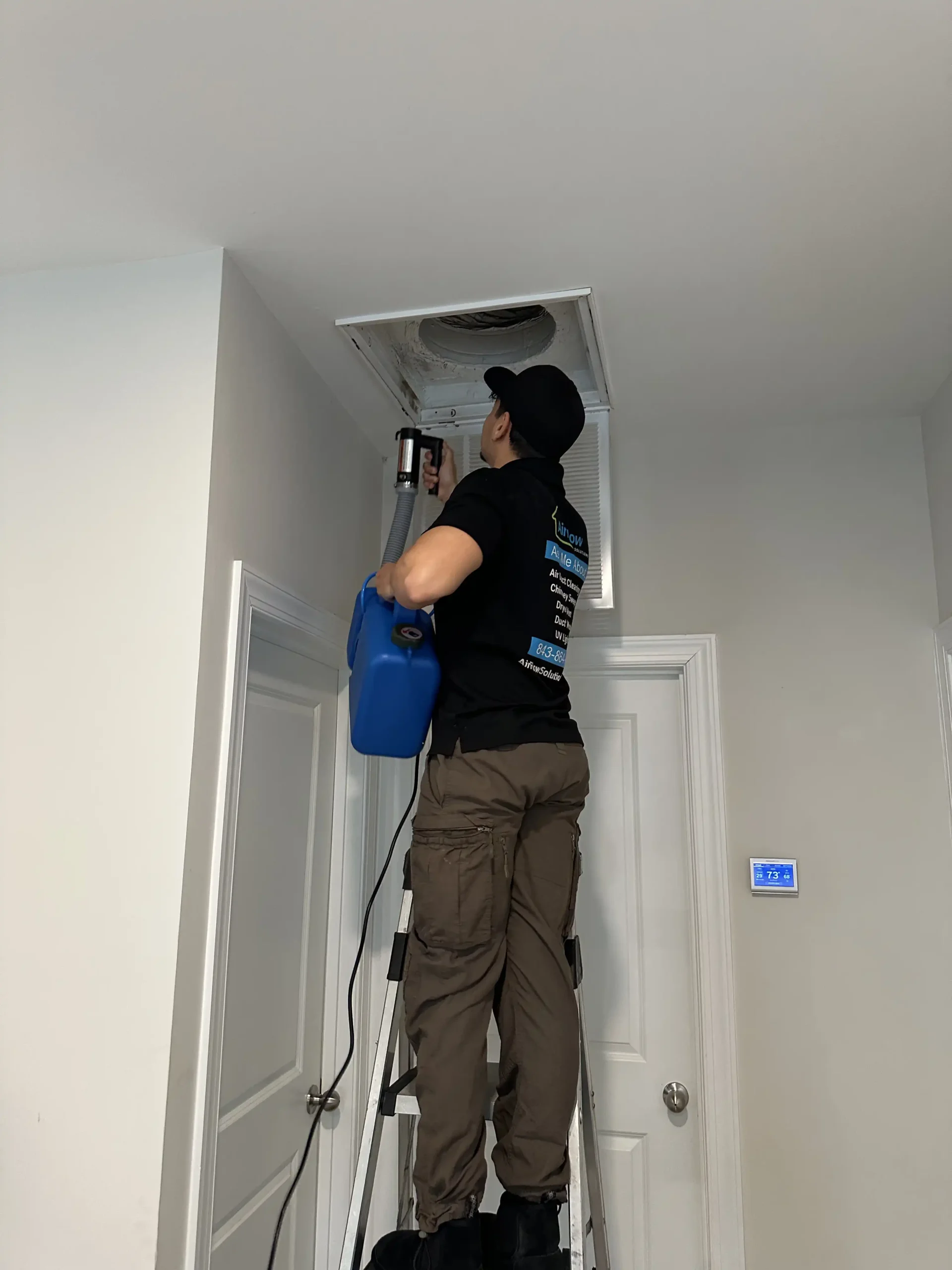
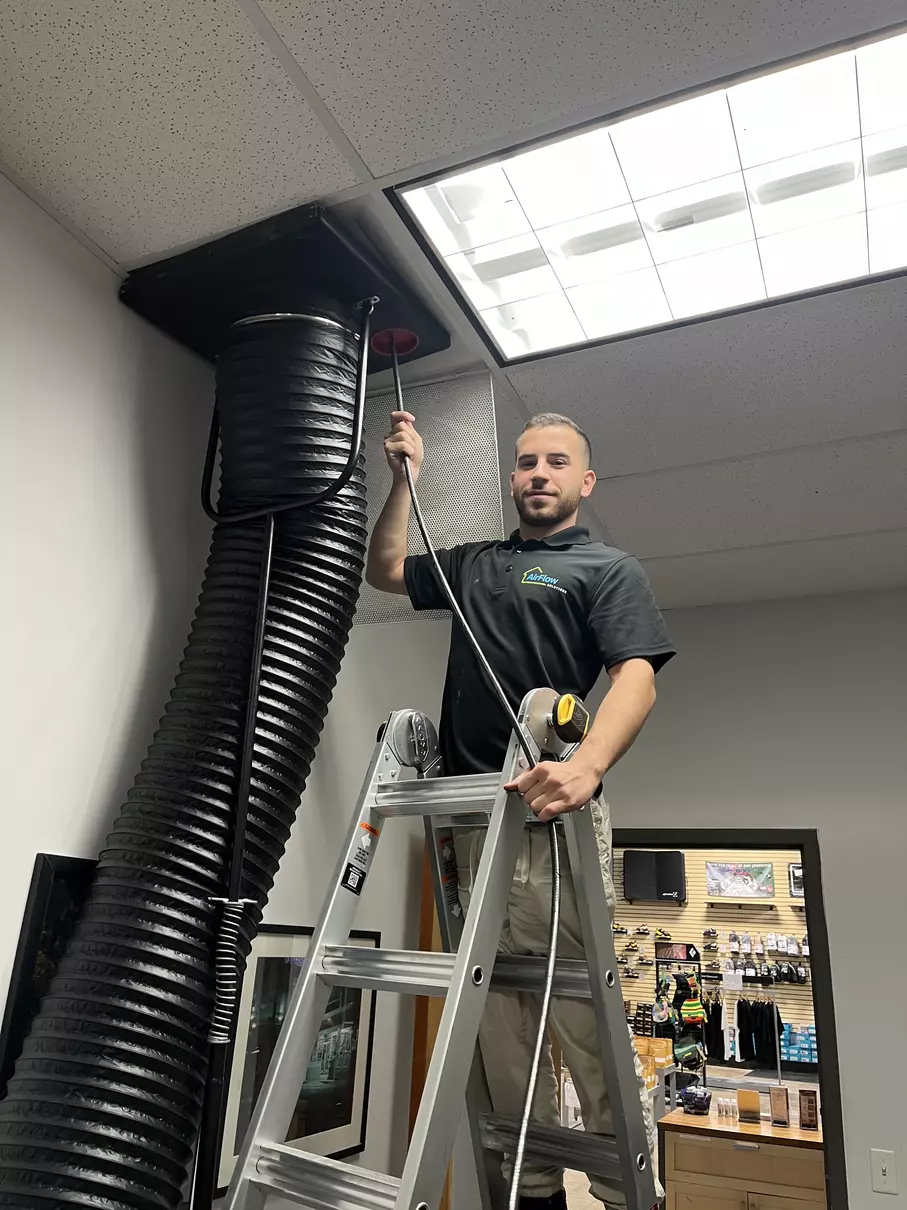
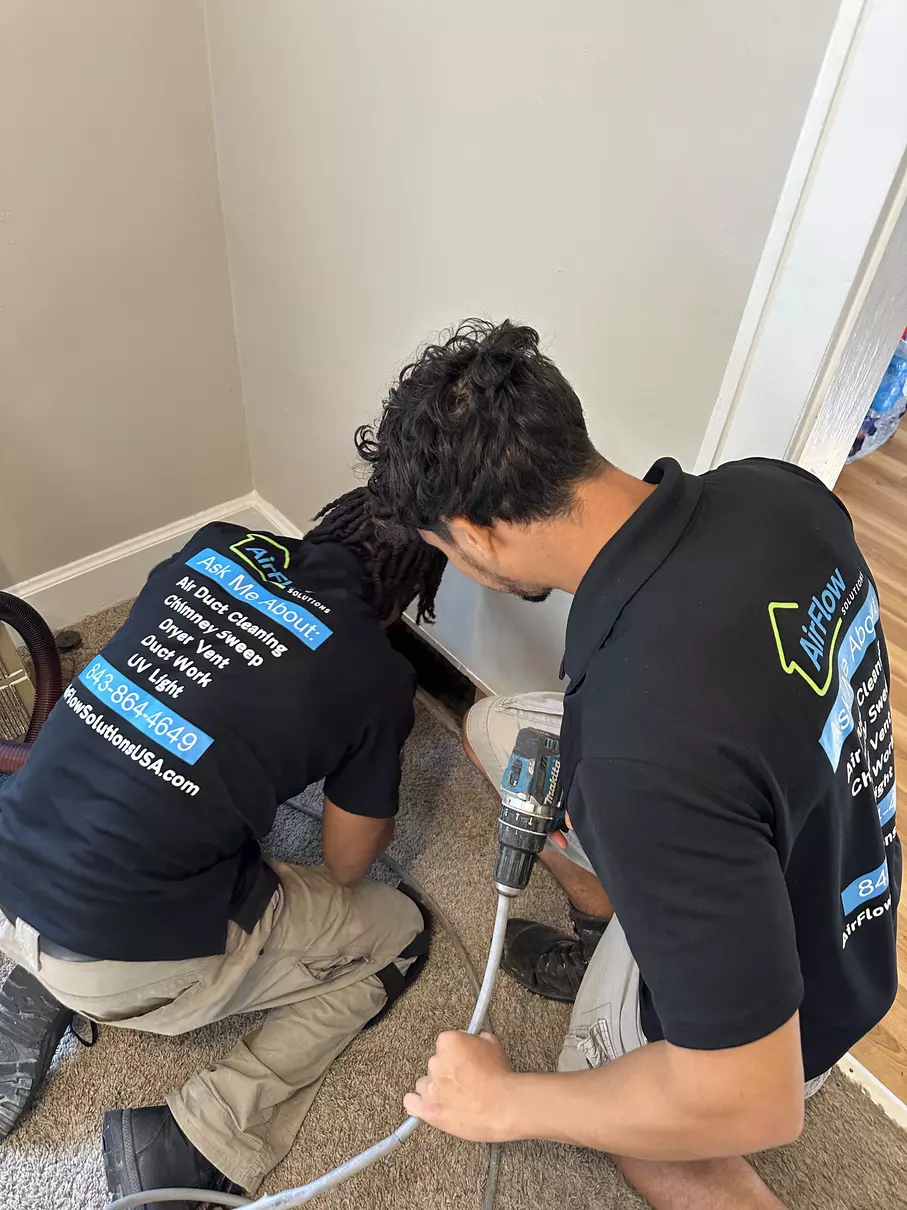
AirFlow Solutions provides source-removal air duct cleaning across Miami and South Florida using continuous negative-pressure extraction, mechanical agitation, and HEPA-filtered collection. We clean the whole system – supply ducts, return ducts, registers, plenums, and accessible components – and document the work with before-and-after photographs so you can verify exactly what was done.



AirFlow Solutions provides residential and commercial air duct cleaning across Miami-Dade, Broward, and Palm Beach counties, using source-removal methods aligned with the NADCA ACR Standard: continuous negative pressure on the system, mechanical agitation of each duct run, and HEPA-filtered collection. We clean the complete ventilation network – supply lines, return plenums, branch runs, registers, and accessible components including the blower and coil area – rather than the visible portions alone.
Because South Florida properties run air conditioning nearly year-round in a high-humidity coastal environment, most Miami homes benefit from whole-system cleaning every 2 to 3 years, and every 1 to 2 years in homes with pets, allergen sensitivity, or a history of condensate problems. A typical Miami home or condo takes 2 to 4 hours.
We provide written flat-rate quotes with no hidden fees, take before-and-after digital photographs on every project, and are fully insured. Our team is available Monday through Saturday, 8:00 AM to 8:00 PM, and Sunday 8:00 AM to 2:00 PM.
Company | AirFlow Solutions – family-operated, fully insured ventilation specialists |
Core service | Source-removal air duct cleaning using continuous negative pressure, mechanical agitation, and HEPA-filtered extraction |
Phone | (645) 225-2074 |
info@airflowsolutionsusa.com | |
Hours | Monday–Saturday 8:00 AM – 8:00 PM · Sunday 8:00 AM – 2:00 PM |
Service area | Miami-Dade, Broward, and Palm Beach counties |
South Florida office | 3440 Hollywood Blvd, Suite 415, Hollywood, FL 33021 |
Typical duration | 2–4 hours per residential property |
Recommended interval | Every 2–3 years for South Florida properties; every 1–2 years with pets, allergen sensitivity, or condensate history |
Included | Supply and return duct cleaning, register and grille removal and cleaning, plenum and accessible component cleaning, before-and-after photo documentation |
Pricing | Written flat-rate quotes. No hidden charges, no on-site add-on pressure. Free system evaluation. |
South Florida is not simply a hotter version of a normal climate. Several conditions here combine in ways that change what happens inside a duct system.
Humidity that never really breaks. Miami’s tropical climate sustains roughly 73% average relative humidity across the year, with summer morning readings regularly hitting 84%. There is no dry season in the sense other regions understand it – the moisture load is continuous rather than seasonal.
Cooling that runs nearly year-round. Air conditioners here operate in cooling mode almost every day, producing condensation on coils, in drain pans, and on duct surfaces. A system that never gets an extended off-cycle never fully dries out. This is the single most consequential difference from a seasonal climate.
Coil and condensate biofilm as the primary source. Because of the above, cooling-coil and condensate-pan biofilm is the most commonly identified indoor mold source in South Florida homes. This matters practically: a cleaning that addresses ductwork while ignoring the coil, drain pan, and condensate line has left the most likely source in place.
Slab-on-grade construction. Florida homes are overwhelmingly built on slabs rather than crawl spaces. Concrete floors wick chronic ground moisture that ordinary ventilation cannot clear, sustaining a baseline humidity load throughout the structure.
Concrete block and stucco wall systems. CBS construction means moisture that enters a wall assembly has limited escape paths and can travel behind furring into cavities.
Condominium construction. Greater Miami has thousands of condominium associations, and condo HVAC configurations differ from single-family systems – fan coil units, shorter duct runs, shared risers, and association rules governing access and scheduling.
Coastal salt air and fine particulate. Marine air carries salt and fine grit through intake pathways. Salt is corrosive to metal components and fasteners at a rate fresh air is not.
Storm season water intrusion. Wind-driven rain, roof failures, and window failures during the June-to-October season create hidden wall and ceiling cavity moisture. In Miami’s warm interior, the window between water intrusion and microbial growth is short – the EPA’s 24-to-48-hour guidance represents the outer edge here rather than the expected timeline.
South Florida factor | Direct impact on your system | Our targeted response |
Year-round high humidity (73% average, 84% summer mornings) | Condensation forms on cool duct surfaces and coils, supporting microbial growth | Full negative-pressure extraction; optional EPA-registered antimicrobial where warranted |
Near-continuous cooling demand | Zero system downtime; coil and drain pan stay wet, static pressure climbs | Whole-system source-removal cleaning including coil, pan, and condensate line |
Coastal salt air and fine sand | Corrosive marine particles and grit line duct interiors and stress components | Mechanical rotary brush agitation to scour compacted particulate from duct walls |
Slab-on-grade ground moisture | Concrete wicks chronic moisture that ventilation cannot clear | Assessment of moisture pathways alongside duct cleaning, so the cause is identified rather than only its effects |
High indoor pet dander and micro-dust | Trapped dander recirculates in closed-window environments | Multi-stage HEPA-filtered vacuum extraction to capture fine particulate rather than disperse it |
We would rather set accurate expectations than sell you on claims that do not hold up.
Removes accumulated contamination. Source-removal cleaning physically extracts dust, debris, pet dander, construction residue, and biological material that has accumulated inside the duct system. Where there is genuine buildup, this removes it – and the before-and-after photographs show it.
Improves airflow where buildup was restricting it. This is a mechanical claim and a supportable one. Accumulated debris narrows the effective duct diameter and increases static pressure, forcing the blower to work harder. Clearing it restores air volume, allows the system to reach setpoint faster, reduces electrical draw, and lessens mechanical strain on the blower assembly.
Removes odor sources located in the system. Where musty odor originates in accumulated material, the coil, or the drain pan, removing that material addresses the source.
Provides a clean baseline. After renovation, after purchasing a property with unknown history, or after a water event, cleaning establishes a known starting point.
It is not a medical treatment. Air duct cleaning does not treat, cure, or prevent allergies, asthma, or any other condition. The EPA’s position is that duct cleaning has never been shown to actually prevent health problems, and that studies have not conclusively demonstrated that particle levels in homes increase because of dirty air ducts. Any company promising symptom relief is overstating what the service does. If someone in your household has respiratory symptoms, a physician or board-certified allergist is the right resource.
It does not fix a moisture problem. If the underlying issue is a failing condensate line, slab vapor transmission, a roof leak, or storm intrusion, cleaning removes what the moisture produced without addressing the cause – and the result will not last.
It is not always necessary. The EPA advises cleaning when there is a specific reason rather than on a fixed schedule. If we assess your system and it does not warrant cleaning, we will tell you that.
To understand the signs that genuinely indicate a system needs attention, see our guide on whether your air ducts actually need cleaning.
Yes – and unlike health claims, this one is mechanically demonstrable.
When debris, pet hair, and compacted dust accumulate inside ductwork, they reduce the effective cross-section of the duct and increase system static pressure. The blower motor has to work against that resistance. Removing it produces four measurable effects:
Restored air velocity. Clearing compacted buildup removes internal resistance, allowing the blower to move conditioned air freely to every supply register – including the distant rooms that were underperforming.
Faster temperature recovery. Unrestricted ductwork lets the system reach thermostat setpoint sooner, which matters in a climate where the system already runs almost continuously.
Lower energy draw. Reduced static pressure means the blower draws less power to move the same volume of air.
Reduced mechanical wear. Less backpressure means less strain on the blower wheel and motor, which extends equipment life and reduces the likelihood of a mid-summer failure.
Contaminant | Effect on the system | What cleaning accomplishes |
Compacted dust | Narrows air passages, lengthens cooling cycles | Restores effective duct diameter and air volume |
Pet hair and dander | Collects at returns and registers, restricting intake | Clears blockage, restores balanced distribution |
Moisture-fed biological growth | Restricts airflow and circulates through the home when the system runs | Removes accumulated growth from ducts and accessible components |
Construction residue | Fine particulate settles throughout the run and bypasses filters | Full-system extraction establishes a clean baseline |
Service | Signs you need it | Suggested interval | What it addresses |
AC duct cleaning | Musty odor when the AC cycles on, dark specks at registers, weak airflow in distant rooms | Every 2–3 years given year-round operation | Removes moisture-fed buildup, restores static pressure and airflow |
Air handler & coil cleaning | Musty air at startup, unit icing, sluggish cooling, rising power bills | Annually, before peak summer | Improves heat transfer and addresses the most common South Florida indoor mold source |
Dryer vent cleaning | Multiple drying cycles needed, humid laundry room, exterior flapper not opening | Annually | Reduces fire risk, lowers energy draw, prevents humid backflow |
Register & grille cleaning | Dust streaks on ceiling grilles, dander behind return covers | Every 1–2 years | Cleaner intake surfaces, better localized airflow |
Whole-system restoration | New property purchase, post-renovation dust, unexplained system odor | Every 2–3 years, or event-driven | Full baseline reset of the air delivery system |
Our core service is comprehensive cleaning of the home’s air distribution system, covering the full network rather than the visible portions.
The dryer exhaust is a separate pathway with its own fire-safety relevance – dryer vent cleaning that addresses fire safety and overall home airflow can be scheduled alongside a duct cleaning visit.
A rigorous, documented methodology matters more than equipment brand names. Here is what happens on a Miami job.
For a fuller explanation of the method itself, see what air duct cleaning is and how the process works.
We offer EPA-registered antimicrobial application as an optional service, not a standard step – and we follow EPA guidance on when it is appropriate.
The EPA’s position is that antimicrobial products should be applied only after a system has been properly cleaned, if at all, and that only products specifically registered for use in HVAC systems should be used. Applying a biocide to a dirty system does not work. We recommend it only where there is a specific reason, and we explain what the product is and why we are suggesting it.
Scope | Typical range | What’s included |
Standard full-system cleaning | $450–$750 | Supply and return ducts, registers, plenums, accessible components, before/after photos |
Larger homes / multiple systems | $750–$1,100+ | Additional air handlers, higher register count, extended service time |
Optional antimicrobial application | Add $85–$225 | EPA-registered product, applied after cleaning where warranted |
Dryer vent cleaning (combined) | $100–$200 | Scheduled alongside duct cleaning |
Pricing depends on square footage, register count, number of air handlers, system accessibility, and actual contamination level. We provide written flat-rate estimates after evaluating the system – not before.
A note on very low advertised prices. Proper whole-system cleaning takes 2 to 4 hours, requires substantial extraction equipment, and involves trained technicians. That establishes a real cost floor. A $49 or $99 “whole house” offer does not cover that work – it typically covers vacuuming a foot or two into each register opening, which removes almost nothing from where accumulation actually sits. The low price is accurate for that work; it simply is not the work most people believe they are buying.
Call (645) 225-2074 for a free, transparent estimate for your Miami property.
Season | South Florida factor | Effect on ductwork | Sensible action |
Spring (Mar–May) | Rising temperatures, heavy tropical pollen | Pollen mixes with ambient moisture, forming sticky deposits in supply runs | Pre-summer system check and cleaning if warranted |
Summer (Jun–Aug) | Peak heat and humidity, near-continuous cooling | Heavy condensate production; coil and drain pan under sustained load | Verify condensate drainage; address any musty odor at startup promptly |
Fall (Sep–Nov) | Atlantic storm season, wind-driven rain | Water intrusion risk; cavities can stay wet for weeks after visible repairs | Post-storm moisture assessment; act inside the short growth window |
Winter (Dec–Feb) | Mild weather, closed-window living, lower humidity | The one period with any meaningful drying opportunity | Best window for non-urgent system work and scheduled cleaning |
This distinction matters more in Miami than almost anywhere, and it changes both the service required and the regulatory picture.
Cleaning removes accumulated debris. Mold remediation isolates the affected area with containment and negative air pressure, removes materials that cannot be salvaged, and corrects the moisture source – under the IICRC S520 standard. A cleaning performed on a system with established growth does not resolve it, and disturbing growth without containment can spread it further.
Florida regulates this differently from most states. Mold assessment and remediation are licensed activities under Chapter 468, Part XVI of the Florida Statutes, administered by the Department of Business and Professional Regulation. Any professional performing a mold assessment on an area greater than 10 square feet must hold a DBPR Mold Assessor licence. Florida law also prohibits the same licensee from performing remediation on a property where they conducted the assessment within the preceding 12 months – a consumer protection that separates diagnosis from the sale of the fix.
You can verify any contractor’s licence directly at the DBPR licence portal before hiring. We encourage it.
For background on how mold in a system behaves and why it spreads, see whether dirty air ducts can actually make you sick.
Coastal climate and mechanical knowledge. We understand the specific demands South Florida places on HVAC systems – from high-rise condo fan coil configurations to single-family systems running twelve months a year.
Assessment before quoting. We inspect with cameras before we price the work, and if the system does not warrant cleaning, we say so. We would rather lose a job than sell one that is not needed.
Firm upfront pricing. Your written estimate is the final total. No hidden fees, no problems discovered mid-job, no on-site upselling.
Whole-system scope. Supply and return ductwork, registers removed and cleaned, plenums, and accessible components including the coil and drain pan – the parts where South Florida problems actually originate.
Property protection. Floor runners, corner guards, boot covers, and living areas left as we found them.
Verifiable documentation. High-resolution before-and-after photographs of the duct interiors on every completed project.
Fully insured. Proof of coverage available on request.
“AirFlow Solutions completely exceeded my expectations. They removed heavy buildup from our air ducts and air handler and deep-cleaned every intake grille and register. Professional, detailed, and well worth the investment.” – Carlos M., Coral Gables, FL
“A flawless, comprehensive cleaning of the entire duct network in our multi-level condo. The crew arrived on schedule and treated our property with complete respect. They shared clear before-and-after photos and pinpointed airflow bottlenecks we hadn’t noticed.” – Elena R., Brickell, Miami, FL
“Our technician walked us through each stage of the negative-pressure extraction and worked meticulously without cutting corners. The whole experience was smooth from start to finish.” – David S., Coconut Grove, Miami, FL
Most Miami properties benefit from whole-system cleaning every 2 to 3 years, with 1 to 2 years reasonable for homes with pets, allergen sensitivity, or a history of condensate problems. The interval is shorter here than in seasonal climates because air conditioning runs nearly year-round, so coils stay wet and ductwork accumulates continuously. That said, the EPA advises cleaning when there is a specific reason rather than on a fixed schedule – so treat these intervals as a prompt to assess rather than a mandate to clean.
Standard full-system cleaning for an average Miami home or condo typically runs $450 to $750, with larger properties or multiple air handlers running $750 to $1,100 or more. Optional EPA-registered antimicrobial application adds $85 to $225. Pricing depends on square footage, register count, number of systems, accessibility, and actual contamination level. We provide written flat-rate estimates after evaluating the system. Be cautious of $49–$99 “whole house” advertising – proper whole-system cleaning takes 2 to 4 hours with substantial equipment, and a price far below that reflects register-only vacuuming rather than a discount. Call (645) 225-2074 for a free quote.
Most Miami residences and condos take 2 to 4 hours. Duration depends on square footage, register count, system configuration, and how much material is actually present. Larger waterfront properties or homes with multiple air handlers take longer. We provide an accurate time estimate after the initial camera inspection, before work begins.
Air duct cleaning removes accumulated allergens – dust, pollen, pet dander, and biological material – from the duct system where genuine accumulation exists. That removes a real exposure source. But it is not a treatment: it does not treat, cure, or prevent allergies or asthma, and the EPA states that duct cleaning has never been shown to actually prevent health problems. Measures with better support include filtration maintained on schedule, humidity control, dust-mite management in bedding, and addressing moisture sources. For allergy symptoms, consult a physician or board-certified allergist.
Visible dark streaks around registers, musty or stale odor when the cooling system cycles on, debris visibly discharging from vents, uneven airflow between rooms, and dust resettling on surfaces unusually fast. In Miami specifically, a musty smell at startup more often points to the evaporator coil and condensate pan than to the ductwork – which is why the coil and drain pan should be part of any assessment here. Recent renovation, a new property purchase with unknown history, or a storm-related water event are also legitimate triggers.
Because cooling-coil and condensate-pan biofilm is the most commonly identified indoor mold source in South Florida homes. Air conditioners here run in cooling mode nearly year-round, producing continuous condensation on the coil and standing water in the drain pan, with no extended off-cycle for anything to dry. A clogged condensate line is among the most common moisture triggers in Miami properties. A duct cleaning that skips the coil, pan, and condensate line has cleaned the pathway while leaving the most likely source in place.
Often yes, but for a specific reason rather than a general one. Construction residue such as drywall dust, sanding particulate, and insulation fibres routinely remains in duct runs after initial construction or remodeling, and it bypasses standard filtration. Beyond that, condo systems have their own considerations: fan coil configurations, shorter runs, shared risers, and association rules governing access and scheduling. If the unit is new, has been renovated, or was purchased with unknown maintenance history, an assessment is worthwhile.
Coastal winds carry salt, fine sand, and particulate through entryways and intake vents year-round. High relative humidity causes those particles to form a sticky film on interior duct surfaces rather than passing through and out. Ongoing construction activity across the metro adds to the outdoor load. Because the film adheres rather than moving freely, it accumulates and recirculates until it is mechanically agitated loose and extracted.
Act quickly. The EPA’s guidance is that wet materials should be dried within 24 to 48 hours to prevent mold growth – and in Miami’s warm, humid interior that window is at the short end rather than the expected outcome. Wall and ceiling cavities can stay wet for weeks after visible repairs are finished, so post-storm moisture assessment matters even where surfaces look fine. If water reached ductwork or the air handler, have the system assessed. Where mold has established, remediation rather than cleaning applies, and in Florida that is a DBPR-licensed activity.
Yes, where buildup is restricting airflow. Compacted debris narrows the effective duct cross-section and raises static pressure, forcing the blower to work harder to reach setpoint. In a climate where the system already runs almost continuously, that added resistance means longer cycles, higher power draw, and more mechanical wear. Clearing it restores air volume, shortens recovery time, lowers electrical draw, and reduces strain on the blower assembly. This is a mechanical outcome and a measurable one.
Yes, when performed by experienced technicians. Older properties across Miami and Coral Gables sometimes feature unusual duct chases or older duct materials that require care. We adjust vacuum pressure and agitation speed to suit the material rather than applying a single approach to every system, and the pre-service camera inspection identifies fragile sections before any tool enters the run.
Yes, where the odor source is inside the system. Persistent smells from trapped moisture, microbial growth, cooking residue, pet dander, or standing condensate accumulate on duct surfaces and in the coil and drain pan, then circulate whenever the blower runs. Mechanical cleaning removes those sources directly. If the odor originates elsewhere – a wall cavity, a slab moisture issue, or a roof leak – cleaning will not resolve it, which is why we identify the source before quoting.
Ask what equipment they use – proper work requires continuous negative pressure on the system, mechanical agitation, and HEPA-filtered collection, not a shop vacuum at each register. Ask whether the return ductwork, coil, and drain pan are included or priced separately; either is defensible, undisclosed exclusion is not. Ask whether they will assess before quoting, and whether they would tell you if cleaning is not warranted. Ask for before-and-after photographs of duct interiors. Verify insurance directly. For anything mold-related in Florida, verify DBPR licensing at the state portal.
AirFlow Solutions provides professional air duct cleaning across Miami-Dade, Broward, and Palm Beach counties, including:
Miami-Dade – Brickell · Coral Gables · Coconut Grove · Doral · Miami Beach · Kendall · Aventura · Pinecrest · Key Biscayne · Miami Shores
Broward – Hollywood · Fort Lauderdale · Pembroke Pines · Weston · Plantation · Davie · Coral Springs
Palm Beach – Boca Raton · Delray Beach · Boynton Beach · West Palm Beach
South Florida office: 3440 Hollywood Blvd, Suite 415, Hollywood, FL 33021
Ready to restore your system’s airflow?
Contact AirFlow Solutions for a free, no-obligation evaluation of your Miami property.
📞 (645) 225-2074 · ✉️ info@airflowsolutionsusa.com
🕐 Monday–Saturday 8:00 AM – 8:00 PM · Sunday 8:00 AM – 2:00 PM
Fill out the form to get a free estimate!
Let us help you breathe easier and enjoy a fresher indoor environment with our professional air duct cleaning solutions.
Subscribe to our newsletter to get our latest updates and news.
Fill out the form below to book an appointment with us