




(843) 864-4649



Your HVAC system circulates air throughout your entire home. When moisture builds up inside components such as the evaporator coil, drain pan, or ductwork, it can create conditions that allow mold to grow.
Mold spores can then travel through the air distribution system and circulate indoors. While not every HVAC system develops mold, high humidity levels, poor drainage, and restricted airflow significantly increase the risk – especially in the humid climate of the Carolinas and Southeast.
Professional HVAC mold removal focuses on eliminating contamination at the source while improving system conditions to prevent recurrence. According to the EPA, a mold-contaminated HVAC system should not be operated until it has been properly remediated, as it could spread mold spores throughout the entire building.
This is why homeowners across Charlotte, Waxhaw, Greensboro, and surrounding areas trust professional HVAC mold removal companies like Air Flow Solutions to handle the job safely and thoroughly.
Mold requires three main conditions to grow: moisture, organic material, and moderate temperature. HVAC systems naturally provide airflow and temperature regulation, and dust that accumulates inside the system can serve as a food source for mold colonies.
Mold in HVAC systems does not occur randomly. It targets specific components where moisture tends to accumulate:
If condensation is not draining properly or humidity levels remain consistently high, mold growth can begin within 24 to 72 hours and spread progressively over time.
Homes in Charlotte, NC and the surrounding Carolinas region experience long periods of high humidity – particularly during the spring and summer months. This creates persistent condensation inside HVAC ductwork and air handling components. Combined with warm temperatures and organic dust buildup, the environment inside your HVAC system becomes an ideal habitat for mold growth.
Many homeowners first suspect mold when they notice changes in indoor air or unusual odors. Recognizing the early warning signs can help you address the problem before it becomes widespread.
If you notice any of these signs, a professional HVAC mold inspection can determine whether mold is present and recommend appropriate removal steps. At Air Flow Solutions, our specialists provide thorough system evaluations to identify contamination and its source.
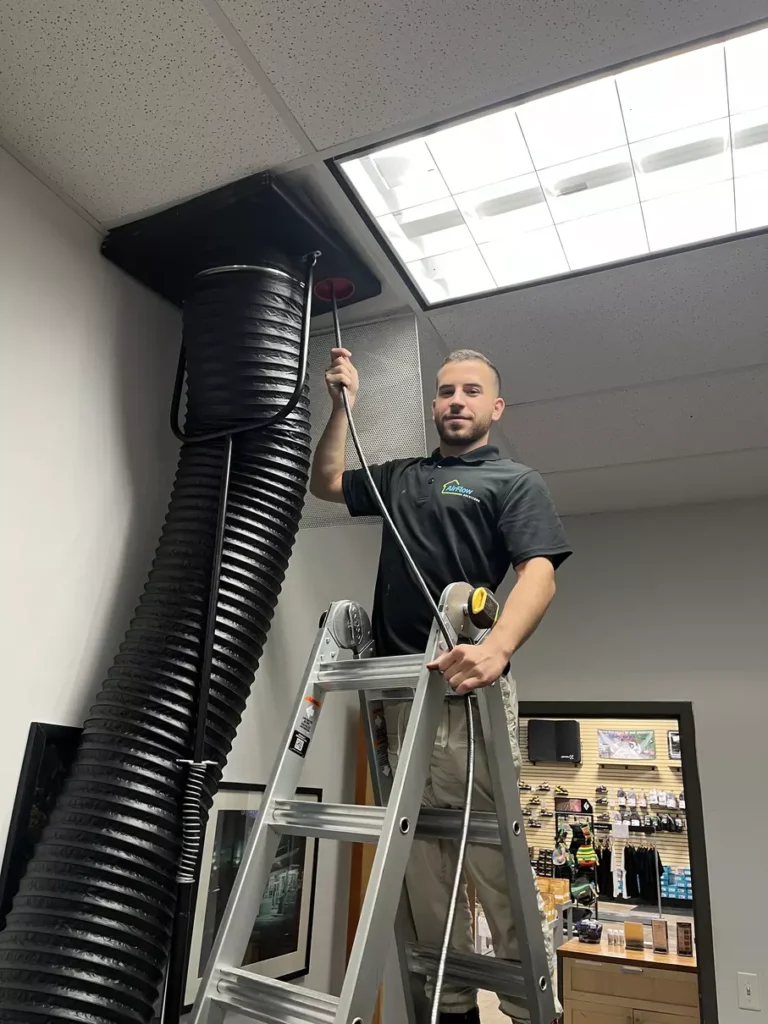
Mold in your HVAC system is more than an inconvenience – it is a potential health concern for everyone in your household. When mold grows inside ductwork and air handling components, spores are distributed through the ventilation system into every room of your home.
According to the EPA and the CDC, certain groups are more vulnerable to the effects of mold exposure:
Exposure to mold spores circulated through HVAC systems has been associated with:
Important note: If you or a family member is experiencing persistent health symptoms that you believe may be related to indoor air quality, we recommend consulting with a healthcare professional. Air Flow Solutions can help assess your HVAC system, but medical evaluation should be handled by a qualified physician.
Because HVAC systems distribute air throughout the home, contamination inside the system can affect overall indoor air conditions in every room. Removing mold from key components helps reduce the circulation of mold spores and improves the air your family breathes.
Improved system cleanliness supports:
Addressing HVAC mold early prevents widespread contamination and potential long-term damage to both your health and your home.
At Air Flow Solutions, HVAC mold removal begins with a comprehensive evaluation of the system. Our step-by-step process is designed to not only remove existing mold but to identify and address the root causes that allowed mold to develop.
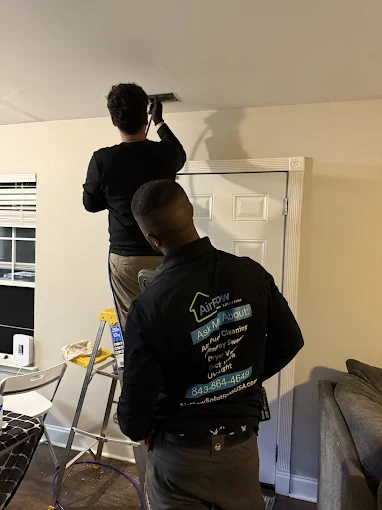
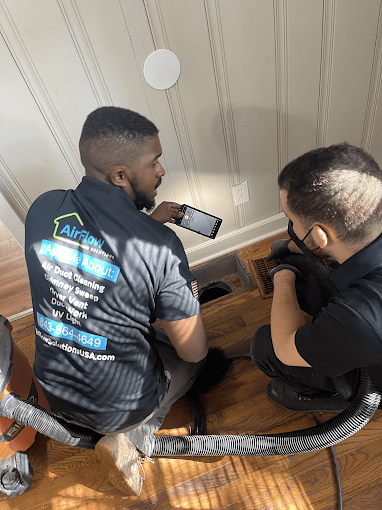
Our HVAC mold removal specialists assess the air handler, evaporator coils, drain components, and visible ductwork to identify contamination and moisture sources. We use professional inspection tools to evaluate areas that are not visible to the naked eye, including the interior of ductwork and behind access panels.
Before any cleaning begins, we take steps to prevent cross-contamination. This includes isolating the work area and protecting your home’s interior from any dislodged mold spores during the removal process – in line with NADCA (National Air Duct Cleaners Association) recommendations.
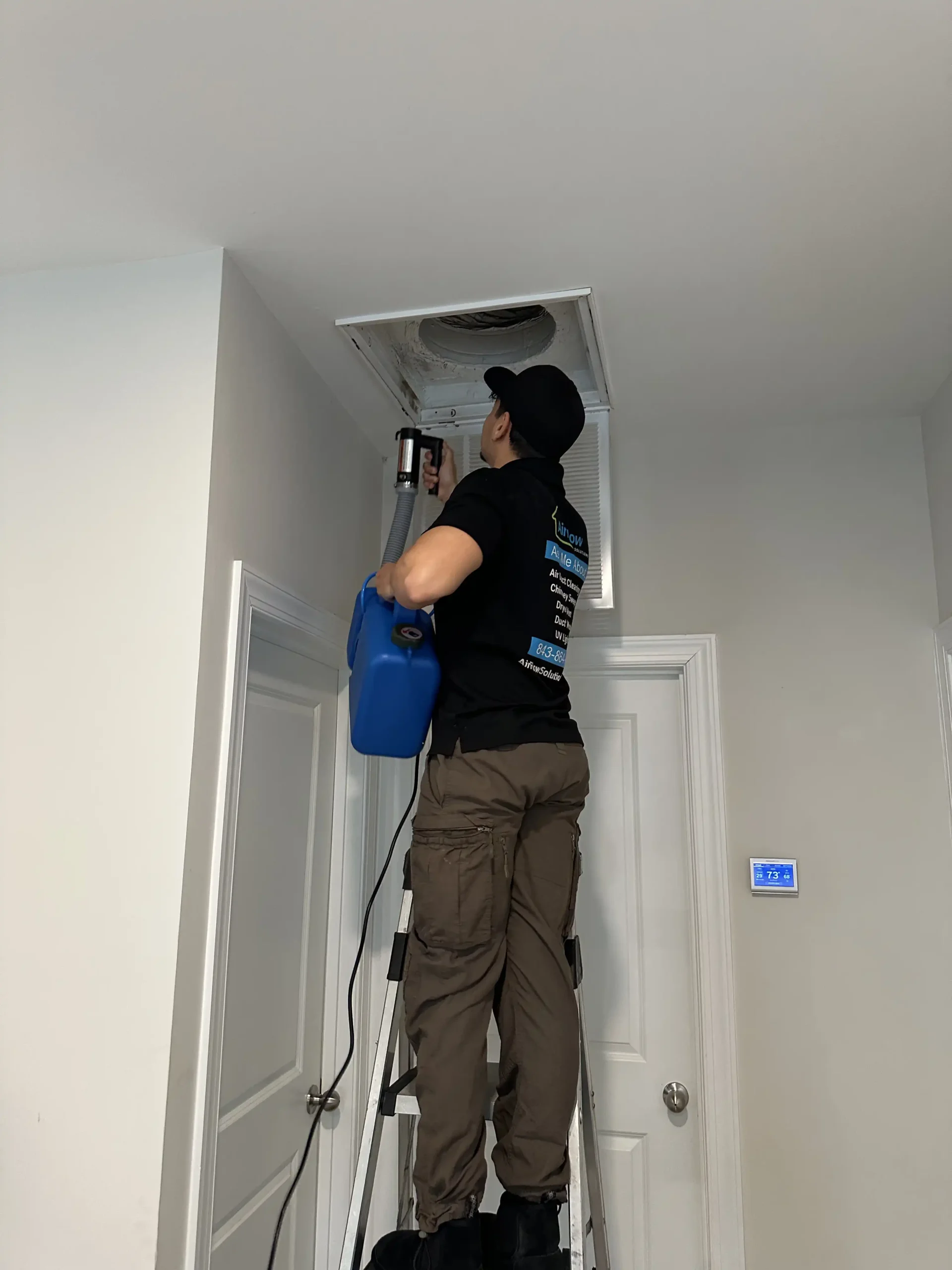
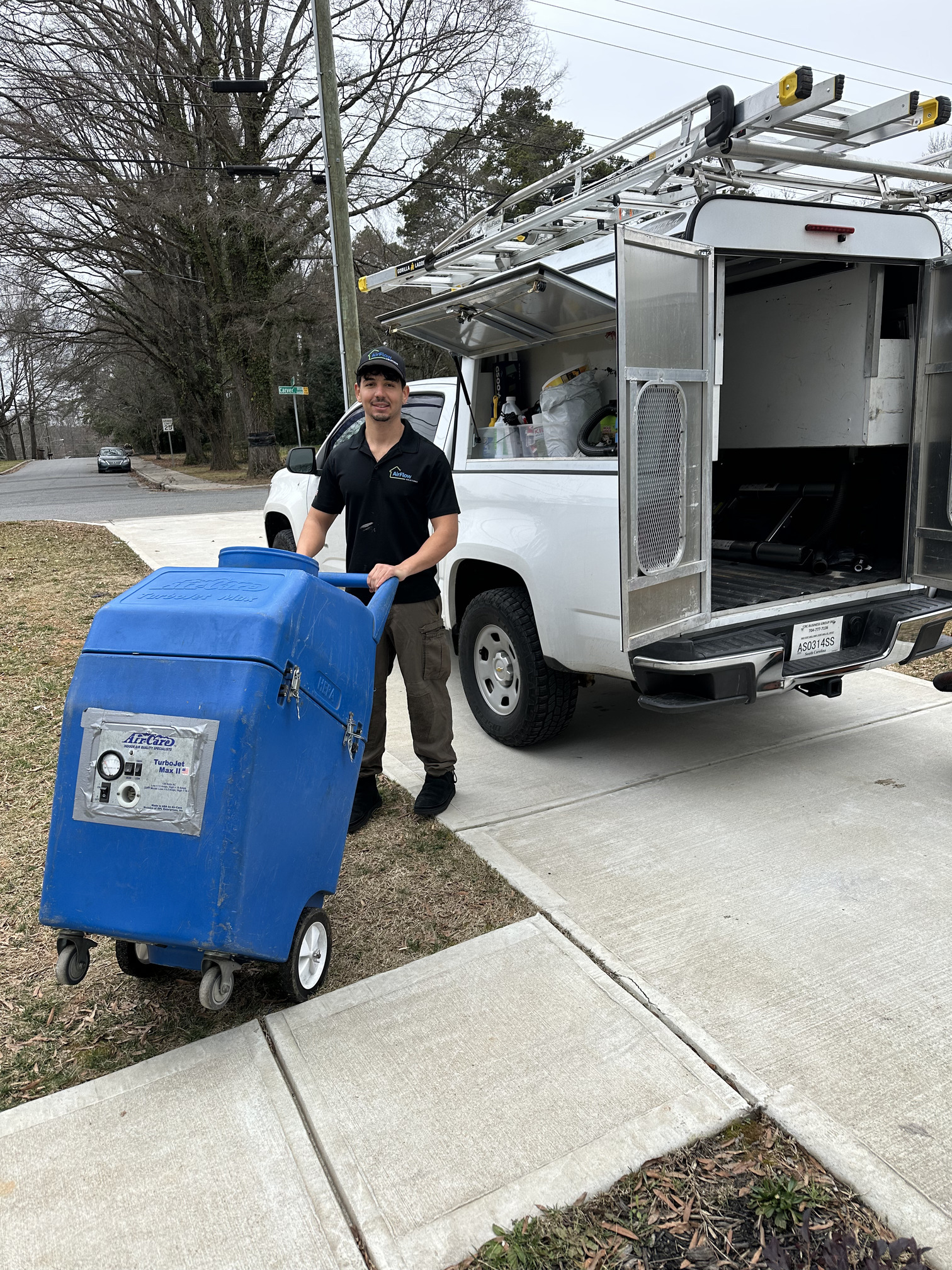
Using specialized tools and professional-grade cleaning solutions, we remove mold growth from all affected HVAC components. Our technicians clean evaporator coils, drain pans, air handler interiors, and duct surfaces using methods that effectively eliminate mold without damaging your system.
After physical mold removal, approved EPA-registered antimicrobial treatments are applied to affected surfaces to help inhibit future microbial growth. We use only products that are approved for use inside HVAC systems and safe for residential environments.
Mold removal is only effective when combined with moisture control. Our team evaluates drainage performance, condensate line functionality, and identifies any conditions contributing to excess moisture in your system.
After removal, we verify system cleanliness and airflow performance. We conduct a final walkthrough with you to explain our findings, the work completed, and recommendations for ongoing prevention.
Our goal is not only to remove visible mold but to address the conditions that allowed it to form – providing you with long-term peace of mind.
Many homeowners wonder whether they can clean mold from their HVAC system themselves. While minor surface cleaning around vents is possible, the EPA recommends hiring a qualified professional for any mold that has entered the HVAC system itself.
Factor | DIY Cleaning | Professional HVAC Mold Removal |
Access to internal components | Limited to visible surfaces around vents and registers | Full access to evaporator coils, drain pans, air handler interiors, and deep ductwork |
Mold detection | Visual inspection only – hidden mold inside ducts and air handler goes undetected | Professional inspection tools identify mold in areas not visible to the naked eye |
Containment | No containment – spores can spread to other rooms during cleaning | Proper containment protocols prevent cross-contamination per NADCA guidelines |
Cleaning effectiveness | Surface cleaning only – mold root system (mycelium) remains intact | Complete removal of mold colonies from all affected HVAC components |
Antimicrobial treatment | Consumer products not rated for HVAC system use | EPA-registered antimicrobial products designed specifically for HVAC environments |
Moisture source correction | Not addressed – mold returns within weeks | Drainage evaluation and moisture correction included to prevent recurrence |
Safety | Risk of spore exposure without proper PPE | Technicians use appropriate protective equipment and safe work practices |
Warranty / guarantee | None | Professional service backed by company guarantee |
You should contact a professional HVAC mold removal company if:
Air Flow Solutions provides expert HVAC mold removal services with trained technicians who follow industry-standard protocols to ensure safe, thorough remediation.
One of the most common questions homeowners ask is how much professional HVAC mold removal costs. The answer depends on several factors specific to your home and system.
The table below provides general cost ranges for common HVAC mold removal scenarios. Actual pricing may vary based on your specific system and the scope of contamination. Air Flow Solutions provides free, no-obligation estimates for accurate project pricing.
Service Type | Typical Cost Range | What’s Included |
HVAC mold inspection | $0 (free with Air Flow Solutions) | Visual and tool-assisted inspection of air handler, coils, drain components, and accessible ductwork |
Localized mold removal (drain pan, small coil area) | $300 – $700 | Cleaning and antimicrobial treatment of a single component with limited mold growth |
Standard HVAC mold removal (coils + air handler + ductwork) | $700 – $1,500 | Full cleaning and treatment of primary HVAC components including evaporator coils, air handler cabinet, and connected ductwork |
Extensive duct system mold remediation | $1,500 – $3,500+ | Comprehensive mold removal from entire duct system, including supply and return lines, trunk lines, and all HVAC components |
Mold removal with component replacement (insulation, drain pan, etc.) | $2,000 – $4,000+ | Full remediation plus replacement of damaged or non-cleanable components such as interior duct insulation or corroded drain pans |
Moisture correction add-on (drain line repair, dehumidification) | $150 – $500+ | Condensate line clearing, drain pan repair, or dehumidification recommendations to prevent mold recurrence |
Note: These ranges are industry-typical estimates and are provided for informational purposes. Contact Air Flow Solutions for a personalized free estimate based on your specific situation.
Air Flow Solutions provides transparent pricing with no hidden fees. Our HVAC mold removal service typically includes:
We offer free estimates for all HVAC mold removal services. Contact us to schedule an inspection, and we will provide a detailed scope of work and pricing before any work begins.
Air Flow Solutions provides comprehensive air duct and HVAC mold removal services designed to address mold at every point in your heating and cooling system. Our services include:
Complete mold remediation for home HVAC systems, including single-family homes, townhomes, and condominiums. We service all major HVAC brands and system types.
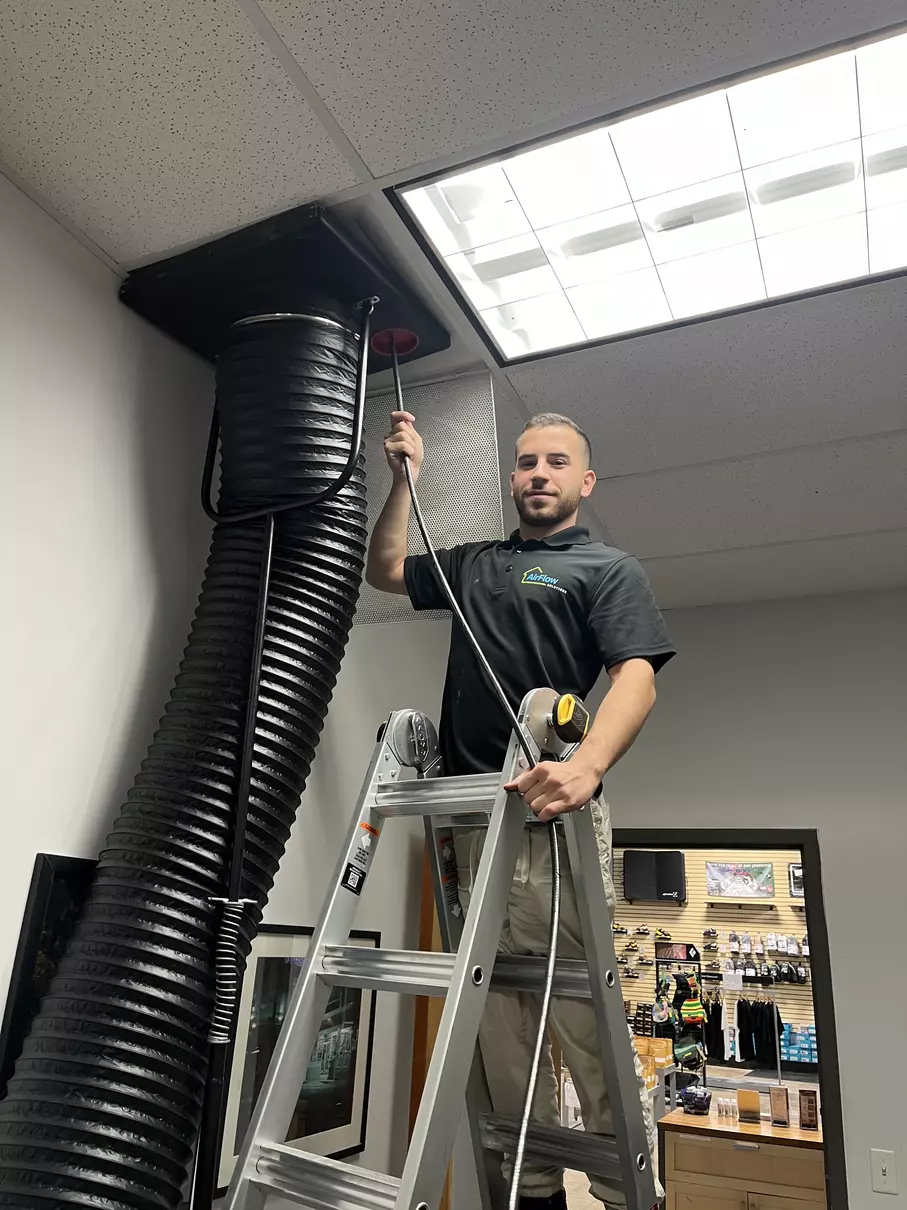
Targeted mold removal from HVAC ducts, including supply ducts, return ducts, and trunk lines. Our technicians use professional equipment to access and clean the full length of your ductwork.
The evaporator coil is one of the most common sites for mold growth in HVAC systems. We clean and treat coils to remove existing mold and inhibit future contamination.
Clogged drain pans and condensate lines are primary moisture sources for HVAC mold. We clean, clear, and evaluate these components as part of every mold removal project.
The air handler cabinet is an enclosed environment that can harbor significant mold growth. We clean and treat the interior of air handlers to restore clean operating conditions.
After completing mold removal, we verify that all affected areas have been properly cleaned and that airflow performance has been restored.
Mold removal is only effective when combined with moisture control. Without correcting humidity or drainage problems, mold may return – sometimes within weeks.
Professional evaluation ensures that underlying issues contributing to mold growth are addressed as part of the solution:
At Air Flow Solutions, moisture control is an integral part of every HVAC mold removal project. We do not simply clean mold – we work to prevent it from returning.
Air Flow Solutions focuses on accurate diagnosis and safe removal methods. We provide clear explanations of findings and realistic recommendations – not upsells or scare tactics.
Homeowners trust us because:
At Air Flow Solutions, every HVAC mold removal project is handled with professionalism, attention to detail, and genuine care for your home and family’s health. We stand behind our work and are not satisfied until you are.

Fill out the form to get a free estimate!
Air Flow Solutions focuses on accurate diagnosis and safe removal methods. We provide clear explanations of findings and realistic recommendations.
Homeowners trust us because:
• We perform detailed system inspections
• We identify root causes of moisture buildup
• We use professional cleaning methods
• We prioritize safety and system performance
• We focus on long term prevention
Our approach ensures that HVAC mold removal is handled thoroughly and responsibly.
EXCELLENTTrustindex verifies that the original source of the review is Google. We used air flow solutions in Charlotte North Carolina for air duct cleaning and dryer vent cleaning in the service was excellent the technician explained everything clearly work carefully and didn't rush the job this is a reliable local company that truly cares about quality workPosted onTrustindex verifies that the original source of the review is Google. Schedule chimney cleaning with flow solutions in Charlotte Tom did a fantastic job work cleanly and finish on time highly recommended for a chimney servicesPosted onTrustindex verifies that the original source of the review is Google. My chimney hadn't been cleaned in years and Shon did an excellent job.He even removed a bird nest I knew nothing about.Highly recommendPosted onTrustindex verifies that the original source of the review is Google. We recently hired Air Flow Solutions for air duct cleaning in Charlotte, NC, and the experience was excellent from start to finish. Our technician, Isaac, arrived right on time and took the time to explain the entire process before getting started. He was very professional, respectful of our home, and worked carefully without rushing. He showed us what was found inside the ducts and explained how the cleaning would help improve airflow and indoor air quality. After the service, the house feels noticeably fresher and cleaner. It’s clear this company takes pride in their work. Highly recommend Air Flow Solutions to anyone in the Charlotte area looking for reliable air duct cleaning service.Posted onTrustindex verifies that the original source of the review is Google. David and Ron did an excellent job. They are very thorough and communicative during the entire job. We are very pleased with their work.Posted onTrustindex verifies that the original source of the review is Google. David did a great professional job.Posted onTrustindex verifies that the original source of the review is Google. Quick response and fast work by DavidPosted onTrustindex verifies that the original source of the review is Google. Mike was great and did everything in a quick manner. Very professional and nice.Posted onTrustindex verifies that the original source of the review is Google. It's a very nice place to bePosted onTrustindex verifies that the original source of the review is Google. David & Ron were very helpful. They explained what was needed and were fair on price. Would recommend.Verified by TrustindexTrustindex verified badge is the Universal Symbol of Trust. Only the greatest companies can get the verified badge who has a review score above 4.5, based on customer reviews over the past 12 months. Read more
The most common signs of mold in your HVAC system include a musty or earthy odor when the system turns on, visible dark spots or discoloration around air vents, increased allergy or respiratory symptoms among household members, and persistent indoor humidity. If you notice any of these indicators, a professional HVAC mold inspection by a qualified specialist can confirm whether mold is present and determine its extent.
The cost of HVAC mold removal varies based on the extent of contamination, the size of your system, accessibility of affected components, and any additional corrective work needed such as drain line repair or insulation replacement. Air Flow Solutions provides free estimates with transparent pricing so you know exactly what to expect before work begins.
The EPA recommends that homeowners hire a qualified professional for mold that has entered the HVAC system. DIY cleaning typically cannot reach mold deep inside ductwork or air handling components, and improper cleaning can spread spores to other areas of your home. Professional HVAC mold removal ensures thorough remediation with proper containment and safety protocols.
The duration of HVAC mold removal depends on the extent of contamination and the complexity of your system. Most residential HVAC mold removal projects are completed within a single day. Larger or more complex projects may require additional time. Your Air Flow Solutions technician will provide a time estimate during the initial inspection.
Mold can return if the underlying moisture problem is not corrected. That is why Air Flow Solutions includes moisture evaluation and drainage assessment as part of every mold removal project. By addressing the root cause of moisture buildup – whether it’s a clogged drain line, improper insulation, or humidity control issue – we significantly reduce the likelihood of mold recurrence.
Mold in HVAC systems can circulate spores throughout your home, potentially affecting indoor air quality. While not all mold species are equally harmful, exposure to elevated levels of any mold can cause allergic reactions, respiratory irritation, and other health effects – particularly for children, elderly individuals, and people with compromised immune systems. If you have health concerns related to mold exposure, consult with a healthcare professional.
Mold removal refers to the physical cleaning and elimination of mold from affected surfaces. Mold remediation is a broader term that encompasses removal as well as containment, moisture correction, and prevention of future growth. At Air Flow Solutions, our HVAC mold removal service is a complete remediation process that addresses both the mold itself and the conditions that caused it.
We recommend having your HVAC system professionally inspected at least once per year, ideally before the cooling season begins. In humid climates like the Carolinas, where HVAC systems work harder to manage moisture, annual inspections help catch early signs of mold growth before it becomes a larger problem.
Air Flow Solutions provides professional HVAC mold removal services across Charlotte, NC, Greensboro, NC, Winston-Salem, NC, Columbia, SC, Charleston, SC, Greenville, SC, Florence, SC, and Augusta, GA. If you’re searching for a trusted HVAC mold removal company near you, contact us today for a free estimate.
We use EPA-registered antimicrobial products that are specifically approved for use inside HVAC systems. These products are designed to eliminate mold and inhibit future microbial growth while remaining safe for residential environments. Our technicians can provide details about the specific products used during your service.
If you suspect mold inside your HVAC system, early action helps prevent further spread and protects indoor air quality.
Air Flow Solutions is ready to inspect, clean, and restore your HVAC system for safer and more efficient operation.
(843) 864-4649
We understand that clean air ducts are essential for maintaining indoor air quality and ensuring the health and comfort of your home or business. That’s why we’ve developed a comprehensive process that delivers exceptional results every time.





Musty odors when the system runs, visible growth near vents, or increased indoor allergy symptoms can indicate possible contamination. A professional inspection confirms presence and severity.
Mold exposure can affect individuals differently. Removing mold from HVAC components helps reduce the circulation of spores indoors.
Yes. Because the HVAC system distributes air throughout the home, mold spores can circulate if contamination is present.
Not necessarily. In many cases, targeted cleaning and moisture correction are sufficient.
The duration depends on the extent of contamination and the size of the system.
Surface cleaning may remove visible spots, but professional equipment is required to address internal components safely.
If moisture issues are not corrected, mold can return. Proper drainage and humidity control are essential.
Professional containment procedures prevent debris from spreading into the living space.
Removing contamination from the system reduces the circulation of mold spores and can improve indoor air conditions.
Air Flow Solutions provides professional inspection, targeted removal, moisture evaluation, and long term prevention strategies to restore HVAC cleanliness and performance
📍Advance
📍Anderson
📍Archdale
📍Asheboro
📍Albemarle
📍Arthurtown
📍Badin
📍Belmont
📍Belwood
📍Berea
📍Bessemer City
📍Blythewood
📍Boiling Springs
📍Burlington
📍Burnsville
📍Cameron
📍Capitol View
📍Catawba
📍Cayce
📍Charleston
📍Cherryville
📍Chester
📍China Grove
📍Clemmons
📍Clemson
📍Cleveland
📍Clover
📍Concord
📍Congaree
📍Cornelius
📍Cramerton
📍Dallas
📍Darlington
📍Davidson
📍Dentsville
📍Denver
📍Earl
📍East Bend
📍East Spencer
📍Easley
📍Elon
📍Enochville
📍Fairview
📍Faith
📍Fallston
📍Five Forks
📍Florence
📍Folly Beach
📍Fort Mill
📍Fountain Inn
📍Gantt
📍Gaston
📍Gastonia
📍Gastinia
📍Germanton
📍Gilbert
📍Golden Grove
📍Goose Creek
📍Graham
📍Granite Quarry
📍Greensboro
📍Greenville
📍Greenwood
📍Greer
📍Grover
📍Hanahan
📍Harmony
📍Harrisburg
📍Hartsville
📍Hebmy Bridge
📍Hickory
📍High Point
📍High Shoals
📍Hollywood
📍Hopkins
📍Huntersville
📍India Hook
📍Indian Trail
📍Irmo
📍Isle of Palms
📍James Island
📍Jamestown
📍Johns Island
📍Kannapolis
📍Kernersville
📍Killian
📍Kings Mountain
📍Kingstown
📍Ladson
📍Lake Norman of Catawba
📍Lake Park
📍Lake Wylie
📍Lancaster
📍Landis
📍Lattimore
📍Lawndale
📍Lesslie
📍Lexington
📍Light Oak
📍Lincolnton
📍Locust
📍Love Valley
📍Lowell
📍Lowesville
📍Lugoff
📍Maiden
📍Mallard Creek
📍Marshville
📍Marvin
📍Matthews
📍McAdenville
📍Mebane
📍Midland
📍Mineral Springs
📍Mint Hill
📍Mocksville
📍Moncks Corner
📍Monroe
📍Mooresboro
📍Mooresville
📍Mount Holly
📍Mount Pleasant
📍Mount Ulla
📍Myers Park
📍Newell
📍Newport
📍Newton
📍North Augusta
📍North Charleston
📍Norwood
📍Oak Grove
📍Oak Ridge
📍Oakboro
📍Pageland
📍Patterson Springs
📍Pelion
📍Pfafftown
📍Piedmont
📍Pineville
📍Polkville
📍Pontiac
📍Powdersville
📍Pumpkin Center
📍Quinby
📍Raleigh
📍Ranlo
📍Red Bank
📍Reidsville
📍Richfield
📍Rock Hill
📍Rockwell
📍Rural Hall
📍Salisbury
📍Seven Oaks
📍Shelby
📍Sherrills Ford
📍Simpsonville
📍South Congaree
📍South Gastonia
📍Spencer
📍Spencer Mountain
📍Springdale
📍Stallings
📍Stanfield
📍Stanley
📍Statesville
📍Steele Creek
📍Sumter
📍Sullivan’s Island
📍Summerville
📍Taylors
📍Tega Cay
📍Timmonsville
📍Troutman
📍Unionville
📍Waco
📍Walkertown
📍Waxhaw
📍Weddington
📍Wesley Chapel
📍Westport
📍Whitsett
📍Wingate
📍Winston Salem
📍York
Let us help you breathe easier and enjoy a fresher indoor environment with our professional air duct cleaning solutions.
Subscribe to our newsletter to get our latest updates and news.
Fill out the form below to book an appointment with us