

Quick Answer: A persistent musty smell in your house usually originates from moisture trapped inside the HVAC system – not from visible surfaces. The most common sources are evaporator coil condensation, clogged drain pans, organic buildup deep inside ductwork, and crawl space humidity migrating upward through return vents. In the Carolinas, where humidity regularly exceeds 70% from May through September, these hidden odor sources develop faster and hit harder than in drier climates.
You’ve scrubbed the bathrooms. You’ve taken out the trash. You even shampooed the carpets. But that damp, earthy, “old house” smell keeps coming back – and it seems to get worse every time the air conditioning kicks on.
If that sounds familiar, you’re not imagining things. And you’re definitely not alone. Across the Carolinas – from Charlotte’s suburban sprawl to the small towns tucked into the Piedmont – homeowners deal with this exact frustration every single summer. The smell isn’t coming from your carpet or your kitchen. It’s coming from inside the walls, behind the vents, and deep inside the system that circulates every breath your family takes indoors.
This guide breaks down the seven most common hidden HVAC odor sources that cause a musty smell in your house, explains why the Carolinas’ climate makes it worse, and walks you through what actually works to fix it – no guesswork, no Band-Aids.
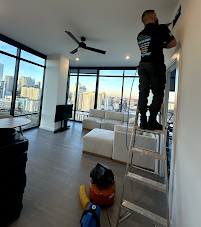
Before we get into the sources, let’s talk about what you’re actually smelling. That musty odor is the byproduct of microbial activity – bacteria, mold, and mildew feeding on organic matter in a damp environment. When these organisms break down dust, dead skin cells, pet dander, and other biological material, they release microbial volatile organic compounds (MVOCs). These are gaseous byproducts with that unmistakable damp, earthy, sometimes “dirty sock” smell.
Key Fact: According to the EPA, microbial volatile organic compounds (MVOCs) are the primary cause of musty indoor odors. They’re produced by active mold and bacterial colonies – meaning if you smell them, the organisms are actively growing somewhere in your home.
Here’s the critical point: air fresheners, candles, and sprays only mask MVOCs temporarily. They don’t eliminate the biological source. The organisms keep growing, keep feeding, and keep producing that smell. The only way to truly fix a musty smell in your house is to find the source, remove the organic material, and eliminate the moisture that’s feeding the cycle.
And in most Carolina homes, the source isn’t where you’d expect.
The evaporator coil is the single most common source of musty smells in residential HVAC systems. It sits inside your air handler – usually in the attic, closet, or garage – and its job is to absorb heat from the air passing over it. In the process, it also pulls moisture out of the air, which condenses on the coil’s surface.
Over time, that constantly wet surface collects a film of dust, pollen, and biological material. In the Carolinas, where the cooling season runs from April through October, the coil stays damp for months at a stretch. That creates a perfect incubator for mold and bacteria – and the smell those organisms produce gets pushed directly into your living space every time the blower kicks on.
This is the classic “dirty sock syndrome” that HVAC technicians talk about. The name comes from the smell itself – that locker-room, wet-laundry odor that hits you right when the system starts up. If your AC smells musty only during the first few minutes of operation, the evaporator coil is almost certainly involved.
Directly below the evaporator coil sits a drain pan designed to catch condensation and route it outside through a drain line. When this pan gets clogged – by algae, rust flakes, or debris – water backs up and sits stagnant. Stagnant water in a dark, enclosed space becomes a breeding ground for bacteria and mold within 24 to 48 hours.
In humid Carolina summers, an air conditioning system can produce 5 to 20 gallons of condensation per day depending on the home’s size and the outdoor humidity level. That’s a lot of water flowing through a small pan and a narrow drain line. If anything restricts that flow, the standing water problem escalates quickly – and so does the musty smell from your air vents.
Key Fact: The CDC notes that mold can begin colonizing damp surfaces within 24–48 hours. A clogged drain pan in a Carolina summer provides the exact conditions – warmth, darkness, moisture, and organic nutrients – for rapid microbial growth.
Your duct system is a network of enclosed channels – typically made of sheet metal, fiberglass duct board, or flexible plastic – that carries conditioned air from the air handler to every room in your home. Over years of operation, the interior surfaces of those channels accumulate a thin but persistent layer of dust, skin cells, pet hair, cooking particles, and pollen.
By itself, dry dust doesn’t smell like much. But when humidity migrates into the ductwork – through leaky connections, unconditioned attic spaces, or damp crawl spaces – that dust layer absorbs moisture and becomes biologically active. The bacteria and mold that colonize this damp organic film produce MVOCs that circulate every time the system runs.
This is one of the trickiest sources to identify because the buildup is hidden. You can’t see it from the supply vents. You can’t reach it with a household vacuum. And it accumulates so gradually that homeowners often don’t realize it’s there until the smell becomes impossible to ignore. If your house smells musty but no mold is visible on any surface, the interior of the ductwork is one of the first places a technician should inspect.
Here’s one that catches a lot of Piedmont and Lowcountry homeowners off guard. If your home sits on a crawl space – and roughly 60% of homes in the Carolinas do – the air beneath your house has a direct pathway into your living space. The stack effect (warm air rising) creates negative pressure at the lower levels of the house, pulling air upward from the crawl space through gaps in the floor, around plumbing penetrations, and – most significantly – through the return duct system.
If that crawl space has exposed soil, standing water, or poor vapor barrier coverage, it’s pumping humid, earthy-smelling air directly into your HVAC system. The ductwork carries that smell to every room. Homeowners in towns along the Catawba River corridor, Lake Norman, and the coastal plain deal with this constantly because the water table sits close to the surface.
For homes where the crawl space is the root cause, sealing off the moisture source beneath your home is often the single most impactful fix – not just for the smell, but for indoor humidity, energy efficiency, and structural protection.
This one sounds simple, but it’s more common than you’d think. A standard air filter – especially the cheap fiberglass kind – can become saturated with moisture during high-humidity months. When that happens, the trapped dust and organic material on the filter surface becomes biologically active. The filter itself starts producing a musty smell, and every cubic foot of air the system moves passes directly through it.
Even pleated filters rated at MERV 8 or higher can develop odor problems if they’re left in too long. The EPA recommends checking filters monthly during heavy-use seasons and replacing them every 30 to 90 days. In the Carolinas, where the system runs almost continuously from May through September, monthly replacement is the safer bet.
Not every section of your duct system gets equal airflow. Older homes – especially those that have been renovated or had rooms added – sometimes have duct branches that are partially disconnected, collapsed, or blocked. These dead zones don’t get the constant airflow that keeps the rest of the system relatively dry. Instead, they sit idle, collecting moisture and developing microbial colonies.
In the Charlotte metro and the Piedmont Triad, where housing stock ranges from 1950s ranches to 2020s new construction, mixed duct configurations are extremely common. A home might have original metal ducts in one section and flexible plastic ducts in an addition – with a poorly sealed connection between them. That junction point becomes a dead zone where moisture collects and odors develop.
In attic-mounted systems – which are standard in most Carolina homes built after 1980 – the ductwork runs through unconditioned attic space. The temperature difference between the cold duct surface and the hot attic air causes condensation, especially during the transition months of spring and fall when the system cycles frequently.
Over time, that condensation wets the insulation surrounding the ducts. Wet fiberglass or foam insulation doesn’t dry easily in the humid Southeast. It becomes a reservoir for mold growth that produces MVOCs continuously – even when the HVAC system isn’t running. This is one reason why some homeowners notice a musty smell in their house year-round, not just when the AC is on.
Not every climate produces musty HVAC problems at the same rate. The Carolinas sit in a unique convergence of factors that accelerate every odor source listed above.
Climate Factor | Carolina Reality | Impact on HVAC Odors |
Average summer humidity | 70–85% relative humidity, May through September | Keeps evaporator coils and drain pans perpetually wet; prevents ductwork from drying out between cycles |
Extended cooling season | 6–7 months of active AC use (April–October) | More condensation cycles = more moisture accumulation = faster microbial colonization |
Pollen load | Among the highest in the U.S.; pine pollen season alone runs 6–8 weeks | Organic pollen particles provide nutrient base for bacteria and mold inside ducts and on coils |
Clay soil and high water table | Piedmont red clay; coastal plain sandy loam with shallow water table | Increases crawl space moisture, which migrates into the HVAC system through the stack effect |
Housing stock with crawl spaces | ~60% of Carolina homes use crawl space foundations | Direct pathway for ground moisture to enter the duct system and living space |
Attic-mounted HVAC systems | Standard in most homes built after 1980 | Ductwork exposed to extreme attic temperatures (130°F+) creates condensation on cold duct surfaces |
This is why a homeowner in Charlotte or Raleigh will notice musty HVAC smells more frequently – and more severely – than someone in Denver or Phoenix. The climate itself is working against you.
Before you can fix the problem, you need to narrow down which of the seven sources is the primary culprit. Here’s a diagnostic framework based on when and where you notice the odor.
When the Smell Occurs | Where It’s Strongest | Most Likely Source | Recommended Action |
Only during the first 5–10 minutes of AC operation | Evenly throughout the house | Evaporator coil buildup (dirty sock syndrome) | Professional coil cleaning and drain pan flush |
Continuously while the system is running | Evenly throughout the house | Organic buildup inside ductwork | Professional duct system cleaning with HEPA containment |
When system is off AND on | Strongest in rooms closest to crawl space or basement | Crawl space moisture migration | Crawl space inspection; vapor barrier or encapsulation |
After heavy rain or during very humid weeks | Near floor-level vents or return registers | Crawl space flooding or high water table | Foundation drainage assessment; crawl space sealing |
Gets worse when you haven’t changed the filter in 60+ days | Near return vents (the large grilles) | Saturated or biologically contaminated air filter | Replace filter immediately; switch to MERV 8+ pleated |
Only in specific rooms, not the whole house | One or two rooms only | Disconnected or collapsed duct run creating a dead zone | Ductwork inspection with camera; repair or reconnect |
Year-round, regardless of whether AC or heat is running | Upper floor or near attic access | Wet insulation around attic ductwork | Insulation inspection; possible replacement of wet material |
This diagnostic approach saves time and money because it prevents you from treating the wrong source. There’s no point in cleaning ducts if the real problem is a flooded crawl space – and there’s no point in encapsulating a crawl space if the real problem is a clogged drain pan.
Let’s clear the air (pun intended) on the approaches that don’t actually solve a musty smell in your house:
Air fresheners, candles, and plug-in scents mask MVOCs for a few hours at most. The biological source continues growing. Some scented products even introduce additional volatile organic compounds that can irritate sensitive individuals.
Duct-mounted ozone generators are marketed as odor eliminators, but the EPA has published multiple advisories stating that ozone generators should not be used in occupied spaces. At concentrations high enough to kill mold, ozone damages lung tissue. At safe concentrations, it doesn’t reliably kill mold.
DIY duct cleaning with a shop vac reaches the first 12–18 inches past the vent – less than 5% of a typical duct run. The remaining 95% of buildup stays untouched and continues producing odors.
Spraying Lysol or bleach into vents can damage ductwork materials (especially flexible ducts and duct board) and introduces chemical fumes into the air you breathe. It doesn’t address the organic buildup that’s causing the smell.
Professional coil and drain pan cleaning – A trained technician accesses the evaporator coil, removes biological buildup using approved coil cleaners, flushes the drain pan and drain line, and verifies proper drainage. This addresses sources #1 and #2.
Professional HVAC system cleaning – using sealed negative-pressure equipment and HEPA filtration, trained technicians extract the accumulated organic layer from inside the ductwork without releasing contaminants into the living space. This addresses source #3. The process also reveals disconnected or damaged duct sections (source #6).
Crawl space assessment and encapsulation – For homes where moisture migration is the root cause, a comprehensive crawl space evaluation followed by proper sealing eliminates the moisture pathway. This addresses source #4.
Addressing mold inside your HVAC system – When inspection reveals active mold colonies on the coil, in the drain pan, or inside the ductwork, professional mold remediation using EPA-approved antimicrobials eliminates the biological source. This is necessary when standard cleaning alone isn’t sufficient.
Filter upgrade and maintenance schedule – Switching to MERV 8 or higher pleated filters and replacing them every 30–60 days during the cooling season addresses source #5 and slows the rate of organic accumulation throughout the system.
Insulation replacement around ductwork – When attic duct insulation has absorbed moisture and become biologically contaminated, replacement is the only permanent fix. Patching or drying saturated fiberglass rarely eliminates the embedded mold. This addresses source #7.
Once you’ve identified and treated the source, the goal shifts to prevention. Here’s what actually keeps a Carolina home smelling fresh long-term.
Maintenance Task | Frequency | Why It Matters for Odor Prevention |
Replace HVAC air filter | Every 30–60 days during cooling season; every 90 days during heating season | Prevents filter saturation and biological contamination |
Clear condensate drain line | Twice per year (spring and mid-summer) | Prevents drain pan overflow and standing water |
Run the HVAC fan in “ON” mode for 15 min after cooling cycle | Daily during humid months | Dries the evaporator coil surface, reducing microbial growth window |
Inspect crawl space for standing water or vapor barrier damage | Twice per year (spring and after heavy rain) | Catches moisture migration before it reaches the duct system |
Check attic ductwork insulation for moisture or sagging | Once per year (fall, before heating season) | Identifies wet insulation early – before it becomes a mold reservoir |
Professional HVAC system cleaning | Every 3–5 years (or sooner with pets, allergies, or visible contamination) | Removes the accumulated organic layer that feeds microbial colonies |
Professional coil and drain cleaning | Annually as part of spring tune-up | Keeps the primary condensation surfaces clean and draining properly |
Pet dander is one of the most persistent organic particles in residential HVAC systems. Unlike dust, dander is sticky and oily – it adheres to duct surfaces and coil fins more aggressively than mineral dust. Homes with dogs or cats typically develop musty smells faster because the dander provides a richer nutrient base for microbial growth. If you have multiple pets, consider upgrading to MERV 11 filters and shortening the replacement interval to every 30 days during summer.
Homes built before 1980 in the Carolinas often have original metal ductwork that has accumulated decades of organic buildup. The interior surface of galvanized steel ducts can also develop oxidation that traps moisture. Combine that with the common crawl space foundations of that era, and older homes are particularly vulnerable to every odor source on this list. A comprehensive HVAC system evaluation – including ductwork camera inspection – is the best starting point.
Surprisingly, new homes aren’t immune. Construction generates enormous amounts of drywall dust, sawdust, and chemical off-gassing from adhesives and paints. Much of this material settles inside the duct system before the home is occupied. If your new home smells musty within the first year or two, residual construction debris combined with first-season condensation is a likely cause.
Odor Source | DIY Feasible? | What You Can Do Yourself | When to Call a Professional |
Dirty or damp air filter | ✅ Yes | Replace the filter immediately; inspect for moisture on the old filter | If the filter is wet, the root cause (coil or drain issue) needs professional diagnosis |
Clogged condensate drain line | ✅ Partially | Flush the line with diluted vinegar from the indoor access point | If the clog is deep in the line or the pan is overflowing, a tech needs to clear it and verify drainage |
Evaporator coil buildup | ❌ No | The coil sits inside a sealed air handler that requires technical access | Coil cleaning requires approved cleaners, proper drainage verification, and system reassembly |
Organic buildup inside ductwork | ❌ No | A shop vac reaches less than 5% of the duct run | Full system cleaning requires negative-pressure equipment and HEPA containment |
Crawl space moisture | ✅ Partially | Check for standing water and visible vapor barrier damage | Encapsulation, drainage, and dehumidification are professional-grade installations |
Disconnected or damaged duct runs | ❌ No | Inspect visible duct connections in the attic or crawl space for obvious gaps | Camera inspection and repair of interior duct sections require specialized equipment |
Wet insulation around ductwork | ❌ No | Visually check attic insulation around duct runs for sagging or discoloration | Removal and replacement of contaminated insulation requires proper containment |
In most cases, the mold or bacteria causing the musty smell isn’t growing on visible surfaces – it’s inside the HVAC system where you can’t see it. The evaporator coil, drain pan, interior duct surfaces, and crawl space are all enclosed environments where microbial growth happens out of sight. The odor reaches your living space through the air vents, which makes it seem like it’s everywhere and nowhere at the same time. A professional HVAC inspection with a camera can locate the source without guesswork.
This is the hallmark of evaporator coil contamination – what HVAC technicians call “dirty sock syndrome.” When the system sits idle between cycles, moisture on the coil surface allows bacteria to multiply. When the blower starts, it pushes air across that contaminated surface and carries the MVOCs into your home. The smell fades after a few minutes because fresh condensation dilutes the bacterial film. But the organisms are still there, and the cycle repeats every time the system starts.
The smell itself – the MVOCs – are generally irritants rather than toxins at typical residential concentrations. However, the organisms producing the smell (mold, bacteria) can trigger allergic reactions, worsen asthma symptoms, and cause respiratory irritation. The EPA notes that prolonged exposure to elevated indoor mold levels is associated with upper respiratory symptoms in otherwise healthy individuals. Children, seniors, and anyone with pre-existing respiratory conditions are more vulnerable.
It depends on the source. If the smell is coming from a saturated or biologically contaminated filter, replacing it will provide immediate relief. But if the source is deeper in the system – the coil, drain pan, ductwork, or crawl space – a new filter won’t address it. The filter only catches particles moving through it; it doesn’t clean the surfaces upstream or downstream. Think of it as treating a symptom rather than the disease.
Three signs point to crawl space moisture as the source: the musty smell is strongest near floor-level vents or in rooms on the ground floor; the smell persists whether the HVAC system is running or not; and the smell gets noticeably worse after heavy rain or during extended humid periods. If you can access the crawl space, look for standing water, exposed bare soil without a vapor barrier, visibly wet floor joists, or white mineral deposits (efflorescence) on the foundation walls.
The cooling process generates far more moisture than the heating process. When your air conditioning runs, the evaporator coil actively removes humidity from the air – producing gallons of condensation daily. All that moisture keeps the coil, drain pan, and connected ductwork damp for months. In the Carolinas, where the cooling season lasts six to seven months, this means the HVAC system stays in prime odor-producing conditions for the majority of the year. Winter’s drier air and lower condensation rates give the system a partial reprieve.
No single solution eliminates it permanently, but a combination approach comes close. Annual professional coil cleaning removes the bacterial film. Running the blower fan in “ON” mode for 10–15 minutes after a cooling cycle dries the coil surface before bacteria can multiply. UV-C germicidal lights installed near the coil continuously suppress microbial growth on the surface. And replacing filters on a 30-day cycle during summer reduces the organic material that feeds the colonies. Together, these measures keep dirty sock syndrome from recurring.
For most Carolina homes, an annual spring tune-up that includes coil inspection, drain pan cleaning, and a basic ductwork check is sufficient for prevention. A comprehensive system cleaning every three to five years addresses the gradual organic buildup that routine maintenance doesn’t reach. However, if you have pets, live in a high-humidity area near a lake or river, have a crawl space foundation, or notice any of the musty smell patterns described in this guide, more frequent professional inspection is warranted.

(843) 864-4649
Let us help you breathe easier and enjoy a fresher indoor environment with our professional air duct cleaning solutions.
Subscribe to our newsletter to get our latest updates and news.
Fill out the form below to book an appointment with us


